Data Privacy Statistics for Informed Decisions in 2025: Protect Your Online Presence
Overview: Why Data Privacy Matters in 2025
In 2025, your personal data is more valuable than ever. Every website you visit, app you download, or post you share collects bits of your life. Data privacy statistics for informed decisions in 2025 reveal growing concerns about how companies use this information. With rising cyber threats and stricter regulations, understanding these trends empowers you to protect yourself. This article dives into the latest stats, practical tools like Incogni, and simple steps to lock down your online privacy.
The Growing Concern Over Data Privacy
Data privacy isn’t just a tech buzzword—it’s a real issue affecting millions. In 2025, 92% of internet users worry about their data privacy, according to Pew Research Center. That’s nearly everyone online. Why the worry? Companies collect everything from your name and email to your browsing habits and device IDs. This data shapes ads, but it can also fall into the wrong hands.
For example, I’ve noticed how ads seem to follow me after a single search. It’s creepy but common. A 2024 Cisco report found 94% of organizations admit their customers won’t buy if data isn’t protected properly. Trust is fragile, and businesses know it. Yet, only 29% of consumers find it easy to understand how companies safeguard their data, per the International Association of Privacy Professionals. This gap fuels distrust and makes privacy tools essential.

Key Data Privacy Statistics for 2025
To make informed decisions, let’s look at the numbers shaping the privacy landscape. These stats highlight why protecting your data is critical:
| Statistic | Source | Insight |
|---|---|---|
| 86% of Americans say data privacy is a growing concern | KPMG | People are increasingly aware of risks like identity theft. |
| 72% want more government regulation on data use | Pew Research Center | Public demand for stricter laws is rising. |
| Data breaches cost businesses $4.45 million on average | IBM | The financial stakes of poor privacy practices are huge. |
| 45% of consumers feel they have no control over their data | Statista | Lack of control drives demand for privacy tools. |
| 48% of organizations use non-public data in AI apps | Cisco | Emerging tech like AI raises new privacy risks. |
These numbers hit home for me. Last year, a friend had their identity stolen after a data breach. It took months to resolve, and it made me rethink how I share information online. The stats show we’re not alone in worrying.
Simple Steps to Lock Down Your Online Privacy
Protecting your data doesn’t have to be complicated. Here are practical, actionable steps to secure your online presence in 2025:
- Use Strong, Unique Passwords: Use a password manager to create and store complex passwords. I started using one last year, and it’s a game-changer—no more reusing ‘password123’!
- Enable Two-Factor Authentication (2FA): 46% of small businesses use 2FA, per SMB Guide. It adds a second layer of security, like a text code or app prompt.
- Limit Data Sharing: Check app permissions and opt out of unnecessary data collection. For instance, I turned off location tracking for apps that don’t need it.
- Browse Safely: Use a VPN to encrypt your internet connection. It’s like locking your digital front door.
- Update Software Regularly: Outdated apps are vulnerable. Set devices to auto-update for the latest security patches.
These steps are straightforward but effective. I’ve implemented most of them, and they’ve given me peace of mind without much effort.

How to Set Up Incogni to Delete Personal Data
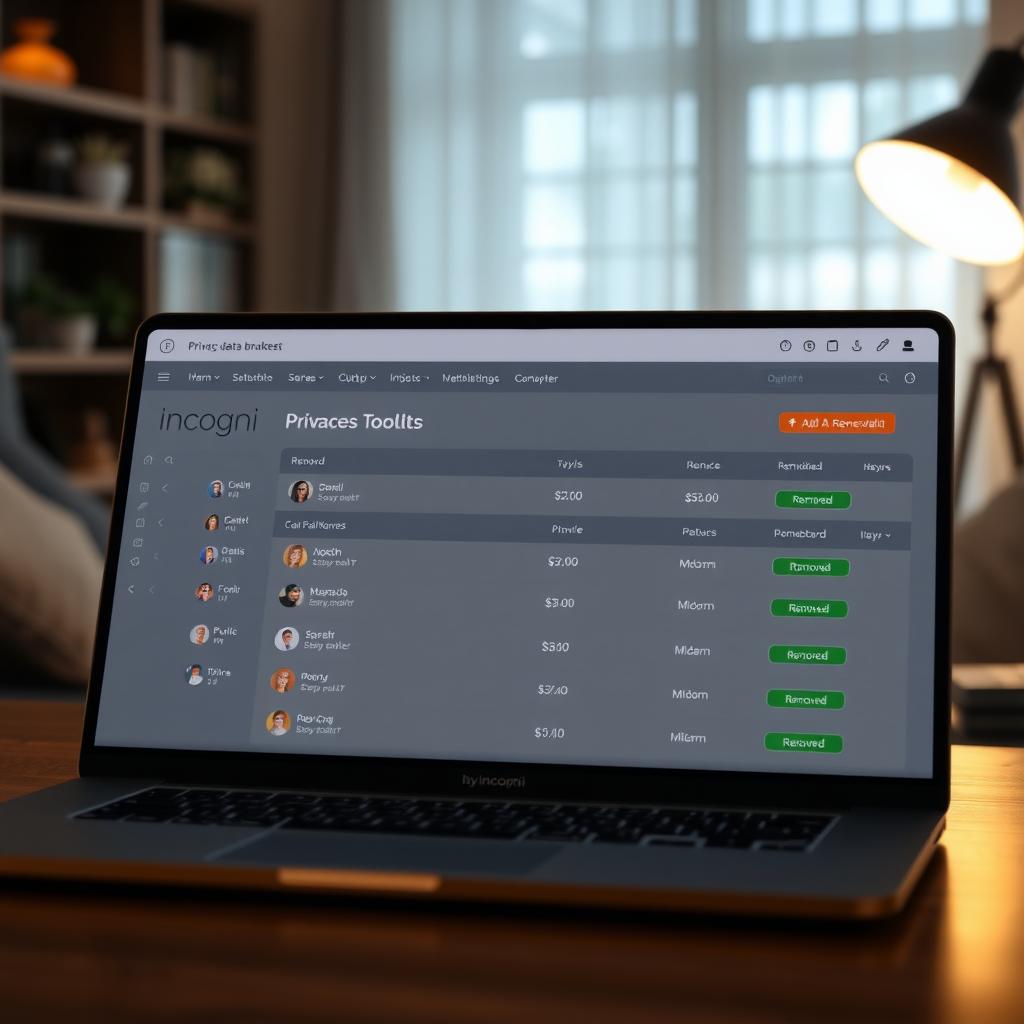
One of the best online privacy tools in 2025 is Incogni, a service that helps remove your personal data from data brokers. These brokers collect and sell your information, often without your knowledge. Here’s how to set up Incogni to delete personal data:
- Sign Up: Visit Incogni’s website and create an account. It’s user-friendly, and plans are affordable.
- Provide Details: Enter basic info like your name, email, and address. Incogni uses this to find where your data is stored.
- Authorize Removal: Grant Incogni permission to contact data brokers on your behalf. They handle the legal requests.
- Monitor Progress: Check the dashboard for updates. Incogni tracks which brokers have removed your data.
- Repeat Regularly: Data brokers often recollect information, so Incogni keeps monitoring.
I tried Incogni after learning 81% of Americans worry about how companies use their data (Pew Research). Within weeks, I saw fewer spam emails and targeted ads. It’s not a complete fix, but it’s a strong start.
Top Online Privacy Tools for 2025
Beyond Incogni, other tools can bolster your online privacy. Here’s a quick list:
- ProtonVPN: Encrypts your internet traffic. Great for secure browsing.
- Signal: A messaging app with end-to-end encryption. I use it for private chats.
- Privacy Badger: A browser extension that blocks trackers automatically.
- DuckDuckGo: A search engine that doesn’t track your queries, unlike Google.
These tools are easy to use and widely trusted. For example, I switched to DuckDuckGo last year, and it’s refreshing to search without ads chasing me. Combining these with Incogni creates a robust privacy shield.
The Role of Regulations in 2025
Privacy laws are tightening globally. In 2025, 66% of countries have data privacy regulations, per UNCTAD. Laws like GDPR in Europe and CCPA in California set strict rules for data handling. Yet, 72% of Americans want even more regulation, according to Pew Research. This push comes as 70% distrust AI companies with their data, per McKinsey.
These laws are a double-edged sword. They protect users but can overwhelm businesses. I’ve seen small companies struggle to comply, yet it’s clear why rules matter—breaches are too costly, both financially and emotionally. Staying informed about these laws helps you know your rights.
Personal Reflections on Privacy
I’ll be honest: I used to ignore privacy policies. Like 60% of Americans (Pew Research), I’d just click ‘agree’ to move on. But after learning how data brokers profit from my information, I started paying attention. It’s empowering to take control, whether by using Incogni or tweaking app settings. The stats show most people feel helpless, but small actions make a difference.
Think about it: if 85% of global adults want to protect their privacy more (Exploding Topics), we’re all in this together. Start with one tool or habit, and build from there. It’s not about perfection—it’s about progress.
Summary: Take Control in 2025
Data privacy statistics for informed decisions in 2025 paint a clear picture: people care deeply about their data, but many feel powerless. With 92% of internet users worried and breaches costing millions, it’s time to act. Simple steps to lock down your online privacy, like using 2FA or Incogni, can protect you. Tools like ProtonVPN and Signal make it easier to stay secure. By staying informed and proactive, you can navigate the digital world with confidence.