Understanding Privacy Laws: GDPR, CCPA, and More
Overview
In today's digital world, your personal information is collected everywhere you go online. Laws like GDPR in Europe and CCPA in California give you rights to control that data. This guide explains the key privacy laws and shares simple steps to lock down your online privacy.

Why Privacy Laws Matter Today
Every time you sign up for a service, shop online, or scroll social media, companies gather details about you—your name, email, location, even browsing habits. Without rules, this data can be sold or misused.
Privacy laws exist to put you back in charge. They force companies to be transparent and give you tools to say “no” when you want.
GDPR: The Gold Standard from Europe
The General Data Protection Regulation (GDPR) went live in 2018 and applies to any company that handles data of people in the European Union.
Core Rights Under GDPR
- Right to access – You can ask what data a company has on you.
- Right to rectification – Fix incorrect information.
- Right to erasure (“right to be forgotten”) – Ask to delete your data.
- Right to restrict processing – Limit how your data is used.
- Right to data portability – Get your data in a usable format.
- Right to object – Stop marketing or profiling.
Companies must get clear consent before collecting sensitive data and report breaches within 72 hours. Fines can reach 4% of global revenue, so big tech takes it seriously.
Many websites now show cookie banners because of GDPR. Even if you're outside Europe, you often benefit when companies apply the same rules worldwide.
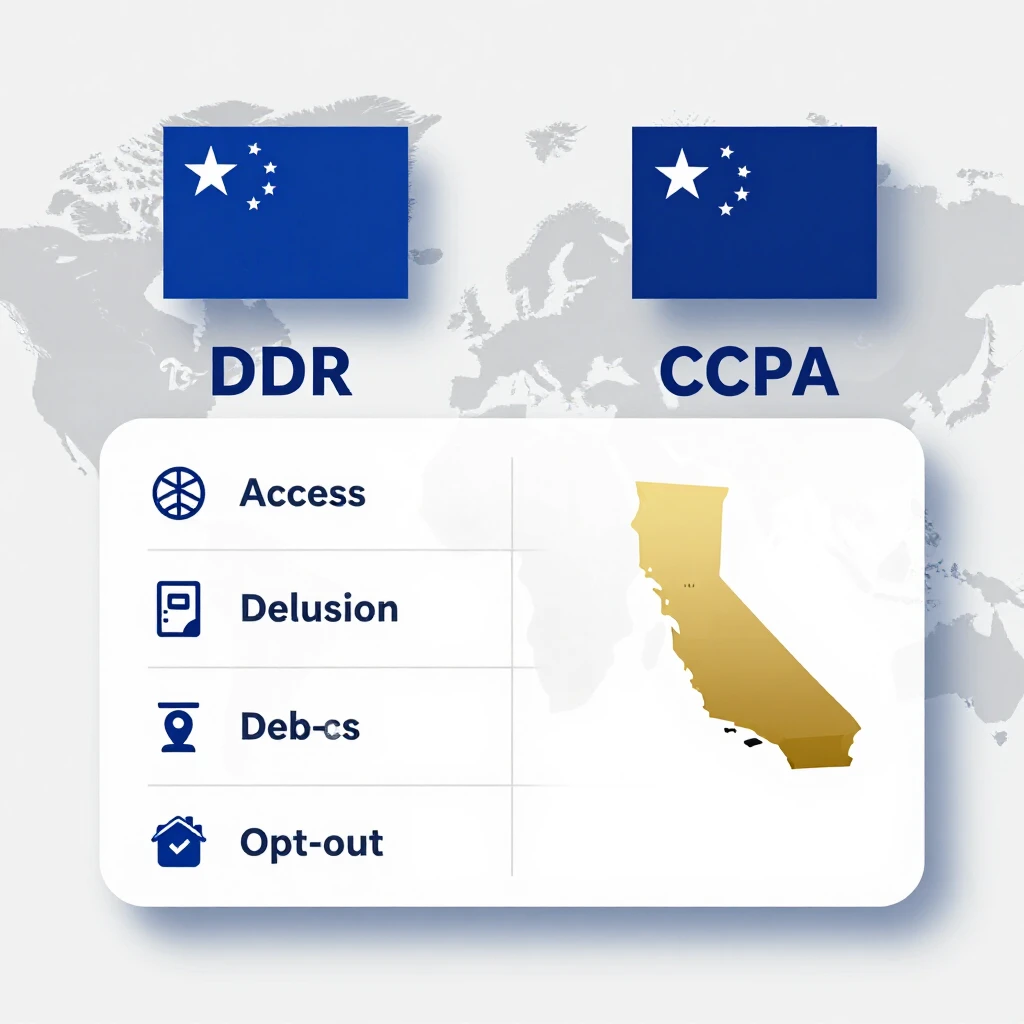
CCPA and CPRA: California Leads in the U.S.
The California Consumer Privacy Act (CCPA) started in 2020, later strengthened by the California Privacy Rights Act (CPRA).
It gives California residents: - Right to know what personal information is collected and sold. - Right to delete personal data. - Right to opt-out of data sales. - Right to non-discrimination if you exercise your rights.
Businesses must respond to requests within 45 days and place a clear “Do Not Sell My Personal Information” link on their sites.
Because so many companies are based in or serve California, CCPA protections often extend to everyone in the U.S.
Other Important Privacy Laws Around the World
- LGPD (Brazil) – Very similar to GDPR.
- PIPEDA (Canada) – Focuses on consent and accountability.
- APPI (Japan) – Strong rules on cross-border transfers.
- POPIA (South Africa) – Requires data protection officers in many cases.
More countries are passing laws every year, creating a global shift toward stronger privacy.
How These Laws Help You in Real Life
Imagine a company you used once still sends you emails years later. Under GDPR or CCPA, you can request deletion and they must comply.
Or if a data broker sells your phone number to telemarketers, you can opt out and stop the calls. These laws turn privacy from a wish into a right.
Simple Steps to Lock Down Your Online Privacy
While laws give you rights, you still need to act. Here are practical steps anyone can take: 1. Use privacy-focused browsers and search engines. 2. Turn on two-factor authentication everywhere. 3. Review app permissions regularly. 4. Opt out of data sales when you see the option. 5. Use online privacy tools that automate removal requests.

How to Use Incogni for Online Privacy Protection
One of the most effective online privacy tools available today is Incogni. It automates the process of sending removal requests to data brokers and people-search sites.
How to Set Up Incogni to Delete Personal Data
- Go to the Incogni website and sign up.
- Provide the basic information Incogni needs to act on your behalf (they keep this private).
- Authorize Incogni to send opt-out requests.
- Sit back—Incogni contacts hundreds of data brokers and monitors for re-additions.
Users often see dozens of removals in the first few months. It saves hours of manual work and keeps working in the background.
I’ve seen friends cut spam calls and emails dramatically after using services like Incogni. The peace of mind is real.
Other Helpful Online Privacy Tools
- Password managers (keep unique strong passwords).
- VPN services (hide your IP address).
- Ad and tracker blockers.
- Email alias services (protect your real address).
Combining strong habits with automated tools gives the best protection.
The Future of Online Privacy
New laws continue to appear, and enforcement is getting tougher. Companies are building “privacy by design” into products. At the same time, data collection grows more sophisticated.
Staying informed and using your rights remains the smartest strategy.
Final Thoughts
Understanding privacy laws like GDPR and CCPA empowers you to take control. You don’t need to be a lawyer—just know your basic rights and use them. Pair legal protections with simple steps and tools like Incogni, and you’ll enjoy a much safer online life.